5-AMINO-1MQ is a small molecule studied as an NNMT inhibitor. The evidence verified for this article is preclinical and does not establish human benefits or safety.
Start with the research question
Three questions organise this guide: what the target enzyme does, what the compound changes in a model, and what has actually been established in people. Each requires different evidence. A packaging image cannot answer any of them by itself.
Why researchers study NNMT
NNMT uses SAM to methylate nicotinamide. A 2014 study reduced Nnmt expression in mice and observed changes in energy expenditure and obesity. This supports investigating the pathway; it was not a human test of 5-AMINO-1MQ. [A03]
Evidence for the compound itself
The 2018 journal study examined fat cells and diet-induced obese mice, reporting changes in lipid accumulation, weight and adipose tissue. These are preclinical findings for a small molecule, not a human peptide trial. [A01]
A 2024 study followed diet-induced obese mice for 28 days. Weight and fat-mass gains were limited, with improved glucose and liver measures in that model. Some authors disclosed commercial interests, making study design and independent confirmation relevant to interpretation. [A02]
Measuring exposure is not proving benefit
A 2021 study developed an LC-MS/MS assay for 5-AMQ in rat samples and measured exposure over time. It addresses analytical and animal pharmacokinetic questions. It does not establish absorption, efficacy or safety of the capsule presentation pictured here. [A04]
Keep conclusions at the level of the evidence
For any claim, identify the model, comparator, follow-up and measured outcome first. A changed animal marker leaves long-term human outcomes unresolved. This bounded review did not verify a human-administration study. Human benefit and safety therefore remain INSUFFICIENT EVIDENCE here, without claiming that no study exists anywhere.
What the illustration can show
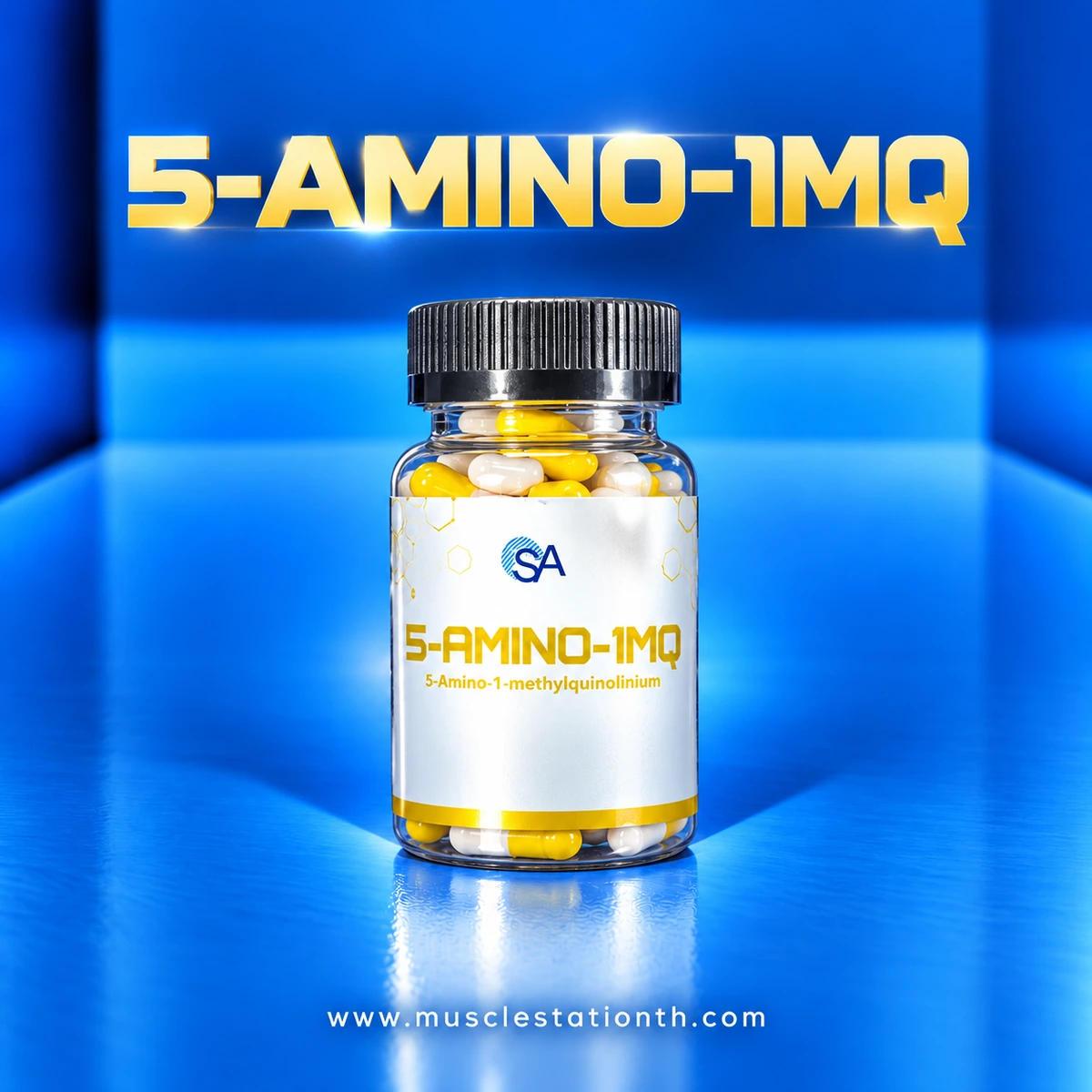
This illustration helps identify the topic readers may encounter. It is AI artwork, not an assay report or product-formulation record. Branding, capsule colours and label text cannot transfer research findings to the pictured bottle. Product-specific registration and quality remain UNKNOWN in this article.
Evidence table
If the table is wider than your screen, scroll it horizontally to read all columns.
| Question / status | Study design / scope | What the source supports | Limitations / unanswered questions |
|---|---|---|---|
| Why investigate NNMT? LIMITED EVIDENCE — PRECLINICAL PATHWAY |
Mouse gene knockdown | Energy-expenditure and obesity effects [A03] | Not human compound testing |
| Direct compound evidence? LIMITED EVIDENCE — PRECLINICAL COMPOUND |
Adipocytes and obese mice | Adiposity-related changes [A01] | Preclinical |
| Additional endpoints? LIMITED EVIDENCE — PRECLINICAL COMPOUND |
28-day obese-mouse study | Glucose and liver measures [A02] | Animal study; disclosed interests |
| Can exposure be measured? LIMITED EVIDENCE — ANIMAL PK |
Rat analytical/PK study | LC-MS/MS quantified exposure [A04] | Not human benefit evidence |
Questions and answers
Is 5-AMINO-1MQ a peptide?
No. The cited work identifies a methylquinolinium small molecule. [A01]
Do mouse results establish human weight-loss benefit?
No such conclusion follows: the 2024 experiment studied mice. [A02]
What does measuring blood exposure tell us?
It tracks exposure in the studied animal, not therapeutic benefit. [A04]
Does the image verify contents or registration?
No. It illustrates the topic; product-specific details remain UNKNOWN.
Sources
- Selective and membrane-permeable small molecule inhibitors of nicotinamide N-methyltransferase reverse high fat diet-induced obesity in mice (2018, A01)
- Nicotinamide N-methyltransferase inhibition mitigates obesity-related metabolic dysfunction (2024, A02)
- Nicotinamide N-methyltransferase knockdown protects against diet-induced obesity (2014, A03)
- Development & validation of LC-MS/MS assay for 5-amino-1-methyl quinolinium in rat plasma: Application to pharmacokinetic and oral bioavailability studies (2021, A04)
Sources checked: 2026-10-17. This article uses the listed evidence. It does not certify a brand or provide individual treatment advice.