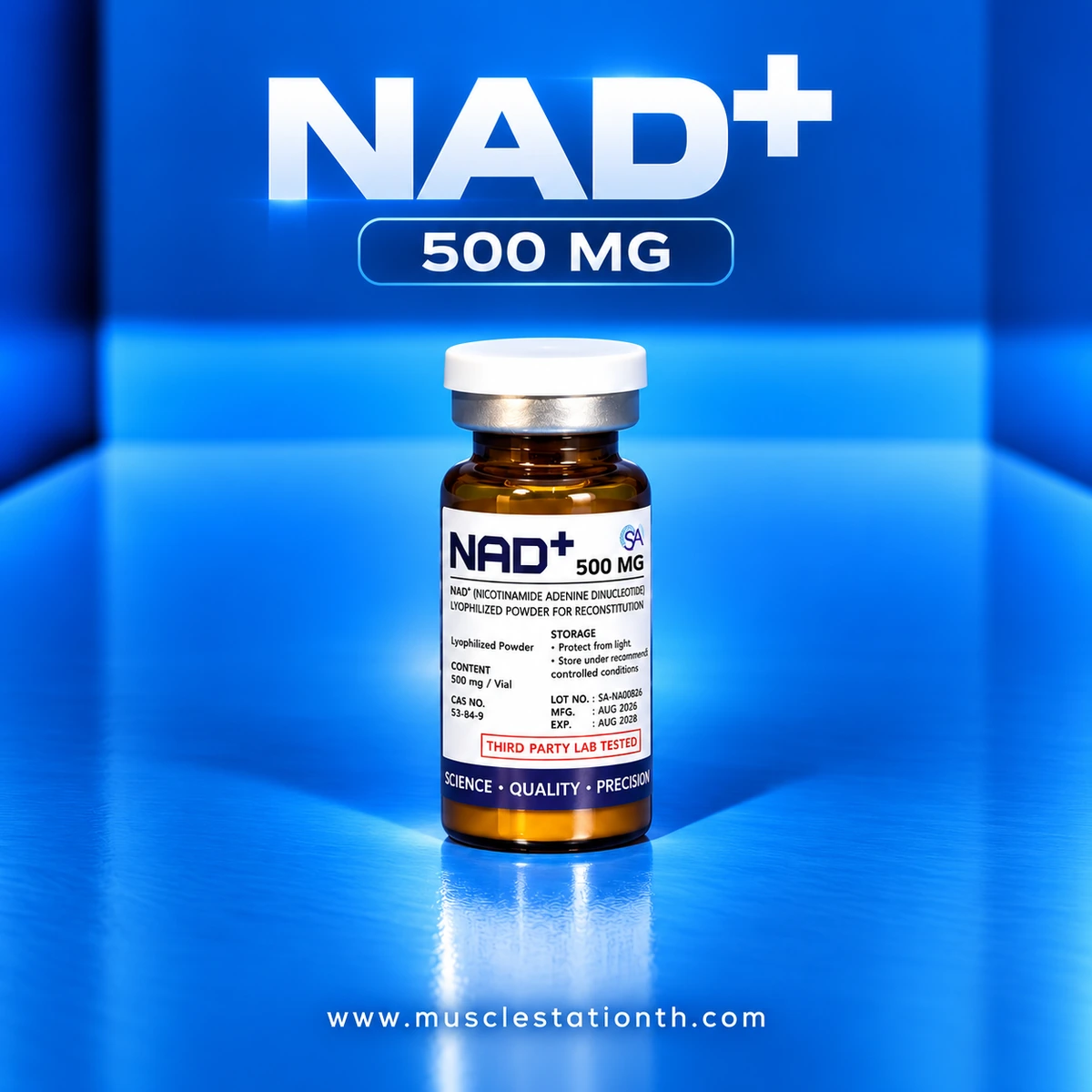
NAD+ (nicotinamide adenine dinucleotide) is a coenzyme involved in cellular energy metabolism and redox reactions, not a peptide. Its biological role does not establish anti-aging benefits for every NAD+ product.
What does NAD+ do in the body?
NAD+ participates in electron transfer during metabolism and serves as a substrate for certain enzymes. These functions explain scientific interest in cellular health. They are separate from demonstrating that an added product improves health. Grant and colleagues’ pilot study
How do NAD+, NADH and NR differ?
- NAD+
- The oxidized form of nicotinamide adenine dinucleotide.
- NADH
- The reduced form of the same redox pair. A product labelled NADH should not be renamed NAD+.
- NR (nicotinamide riboside)
- A precursor used to make NAD+, rather than NAD+ itself.
An oral NR trial in middle-aged and older adults increased NAD+ biomarkers. It studied a particular formulation and population; it did not validate NAD+ vials or establish anti-aging effects. Martens et al., 2018 — Oral nicotinamide riboside trial
What have human studies measured?
A metabolism pilot
The 2019 pilot tracked plasma and urine NAD+ metabolites after intravenous NAD+. It explored how the body handles the substance, rather than testing lifespan extension or exercise recovery. Grant et al., 2019 — NAD+ metabolome pilot
A trial in a specific patient population
A single-center randomized trial enrolled 180 patients with heart failure due to ischemic cardiomyopathy alongside standard treatment. A measure of cardiac pumping function improved at one month; the difference in combined cardiovascular events at six months was not statistically significant. These results cannot be generalized to wellness benefits in healthy people. Yu et al., 2026 (online 2025) — NAD+ trial in ischemic heart failure
Short-term tolerability data in 2026
A retrospective commercial-clinic study comparing intravenous NAD+ and NR reported gastrointestinal symptoms, increased heart rate and chest pressure during NAD+ administration. Follow-up was short and the authors worked for the provider. Those design limitations and commercial interests matter when interpreting the findings. Reyna et al., 2026 — Retrospective NAD+ and NR tolerability pilot
How should a NAD+ listing be assessed?
Check the full substance name, formulation, manufacturer and actual label, then match supporting documents to the specific product and batch. Research on a substance does not authenticate another brand or demonstrate its outcomes. This article does not verify brand-specific Thai registration.
Raw-material quality must also suit the formulation. The US FDA warns that food-grade NAD+ may be unsuitable for sterile compounded medicines and reports adverse events. This US compounding information is not a determination of Thai registration status. FDA — Ingredients suitable for sterile compounding
Frequently asked questions
Is NAD+ a peptide?
No. NAD+ is a coenzyme. Appearing in a peptide catalogue does not change its chemical identity.
Can NR evidence be used for NAD+ products?
Not automatically. NR is a NAD+ precursor. Check the substance, formulation and population actually studied.
Is NAD+ proven to reverse aging?
The studies cited here do not establish that general NAD+ products reverse aging or extend human lifespan.
Does this article verify a particular brand?
No. It explains the substance. Assessing a product requires its actual label, manufacturer and matching documentation.
Related reading
- MOTS-c: evidence on a different mitochondria-related substance
- Sterile water and bacteriostatic water explained
General information enquiries
For questions about substance names, labels or documents, contact LINE: @musclestationth. For personal medical decisions, consult a qualified healthcare professional.
Primary sources
- Grant et al., 2019 — NAD+ metabolome pilot
- Martens et al., 2018 — Oral nicotinamide riboside trial
- Yu et al., 2026 (online 2025) — NAD+ trial in ischemic heart failure
- Reyna et al., 2026 — Retrospective NAD+ and NR tolerability pilot
- FDA — Ingredients suitable for sterile compounding
Information checked: 10 September 2026. General substance information; no specific product or batch has been verified.