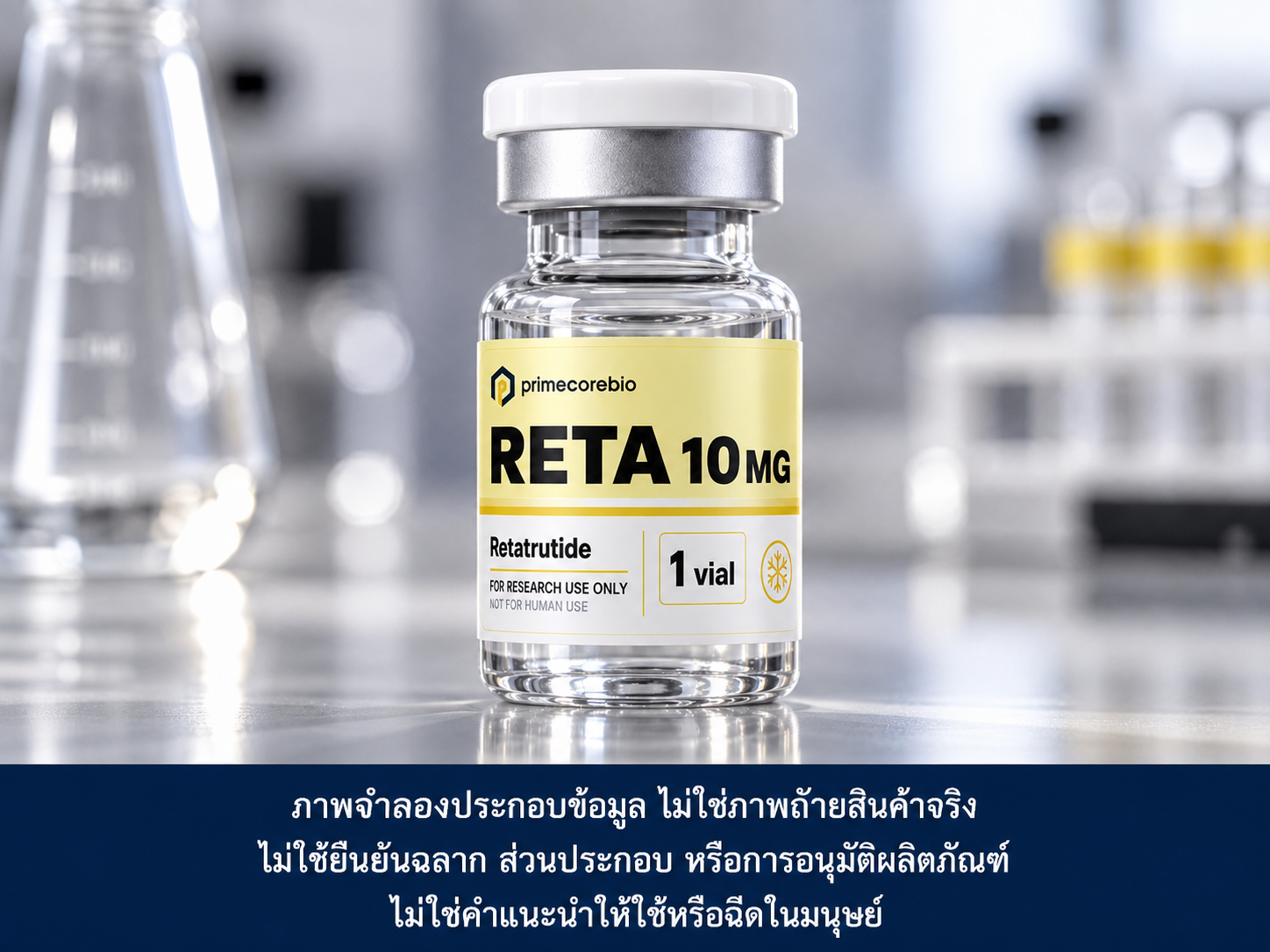
Retatrutide

Retatrutide: ข้อมูลการวิจัย กลไก และข้อจำกัดของหลักฐาน

อัปเดตข้อมูลล่าสุด: 23 สิงหาคม 2026

คำตอบสั้น: Retatrutide เป็นยาทดลองชนิดฉีดสัปดาห์ละครั้งที่กระตุ้นตัวรับ GIP, GLP-1 และ glucagon พร้อมกัน ข้อมูลการทดลองแสดงผลต่อการลดน้ำหนักที่น่าสนใจ แต่ผลลัพธ์ของแต่ละคนแตกต่างกัน และตัวยายังไม่ได้รับอนุมัติจาก FDA ณ วันที่ตรวจสอบ จึงไม่ควรใช้ผลิตภัณฑ์ที่อ้างว่าเป็น Retatrutide นอกการทดลองทางคลินิกที่ได้รับอนุญาต

Retatrutide คืออะไร?

Retatrutide (LY3437943) เป็น triple receptor agonist ที่อยู่ระหว่างการวิจัย กลไกของตัวยามุ่งกระตุ้นตัวรับ 3 ชนิด ได้แก่ GIP, GLP-1 และ glucagon เพื่อศึกษาผลต่อความอยากอาหาร การควบคุมระดับน้ำตาล และการใช้พลังงานของร่างกาย ข้อมูลนี้อธิบายกลไกที่กำลังศึกษา ไม่ใช่คำรับรองผลการรักษาเฉพาะบุคคล

หลักฐานทางคลินิกบอกอะไร?

การศึกษา Phase 2 แบบสุ่ม มีกลุ่มควบคุม และปกปิดสองฝ่ายในผู้ใหญ่ 338 คนที่มีภาวะอ้วนหรือมีน้ำหนักเกินร่วมกับโรคที่เกี่ยวข้อง พบว่า กลุ่มขนาดยา 12 มก. มีการเปลี่ยนแปลงน้ำหนักเฉลี่ยแบบ least-squares ที่ 48 สัปดาห์เท่ากับ −24.2% เทียบกับ −2.1% ในกลุ่มยาหลอก ตัวเลขนี้เป็นค่าเฉลี่ยจากการทดลองที่มีเกณฑ์คัดเลือกและการติดตามเฉพาะ จึงไม่ควรตีความว่าเป็นผลที่ทุกคนจะได้รับ

เหตุการณ์ไม่พึงประสงค์ที่พบบ่อยที่สุดใน Phase 2 เป็นอาการทางระบบทางเดินอาหาร โดยสัมพันธ์กับขนาดยาและส่วนใหญ่มีความรุนแรงเล็กน้อยถึงปานกลาง นอกจากนี้พบการเพิ่มขึ้นของอัตราการเต้นหัวใจตามขนาดยา ซึ่งสูงสุดราวสัปดาห์ที่ 24 และลดลงภายหลัง

สถานะการวิจัยและการอนุมัติ

ทะเบียน ClinicalTrials.gov ระบุว่า TRIUMPH-1 ซึ่งเป็นการศึกษา Phase 3 เสร็จสิ้นแล้ว แต่หน้าทะเบียนยังไม่มีผลการศึกษาฉบับเต็มเผยแพร่ ณ วันที่ตรวจสอบ ขณะที่ผู้พัฒนาประกาศผลระดับต้นจากโครงการ Phase 3 บางการศึกษาแล้ว ข้อมูลระดับต้นควรแยกจากบทความวิจัยฉบับเต็มที่ผ่านการประเมินโดยผู้ทรงคุณวุฒิ

Retatrutide ยังไม่ได้รับอนุมัติจาก FDA และผู้พัฒนาระบุว่ายังไม่ได้รับอนุมัติจากหน่วยงานกำกับดูแลใด ผลิตภัณฑ์ที่ขายโดยอ้างว่าเป็น Retatrutide นอกการทดลองอาจไม่สามารถยืนยันส่วนประกอบ ความบริสุทธิ์ หรือขนาดยาได้

คำถามที่พบบ่อย

Retatrutide เหมือนกับ Semaglutide หรือ Tirzepatide หรือไม่?
ไม่เหมือนกัน Retatrutide กระตุ้นตัวรับ 3 ชนิด ส่วนกลไกและข้อบ่งใช้ของยาแต่ละชนิดแตกต่างกัน การเปรียบเทียบตัวเลขข้ามการทดลองไม่สามารถใช้สรุปว่ายาชนิดใด “ดีที่สุด” สำหรับบุคคลหนึ่งได้

Retatrutide ใช้ลดน้ำหนักได้ทันทีหรือไม่?
ไม่ควรใช้ด้วยตนเอง ตัวยายังอยู่ในกระบวนการวิจัยและการพิจารณาด้านกฎระเบียบ การตัดสินใจเกี่ยวกับการรักษาน้ำหนักควรทำร่วมกับแพทย์หรือผู้ประกอบวิชาชีพที่มีใบอนุญาต

ข้อมูลบนหน้านี้ใช้แทนคำแนะนำแพทย์ได้หรือไม่?
ไม่ได้ เนื้อหานี้จัดทำเพื่อให้ความรู้และสรุปหลักฐาน ไม่ใช่การวินิจฉัย การสั่งยา หรือคำแนะนำขนาดยา

ข้อควรระวัง

อย่าซื้อหรือใช้ผลิตภัณฑ์ที่ไม่สามารถตรวจสอบแหล่งที่มาได้ โดยเฉพาะผลิตภัณฑ์ฉีดที่อ้างว่าเป็นยาทดลอง หากมีอาการผิดปกติหรือกำลังพิจารณาการรักษาภาวะอ้วน เบาหวาน หรือโรคเมตาบอลิก ควรปรึกษาแพทย์และตรวจสอบสถานะการอนุมัติกับหน่วยงานกำกับดูแลในประเทศของคุณ

แหล่งอ้างอิงหลัก

หมายเหตุ: เนื้อหานี้เป็นข้อมูลการศึกษา ไม่ใช่โฆษณาหรือคำแนะนำทางการแพทย์ และจะต้องปรับปรุงเมื่อมีข้อมูลวิจัยฉบับเต็มหรือการเปลี่ยนแปลงสถานะการอนุมัติ

Last reviewed: 23 August 2026

Short answer: Retatrutide is an investigational once-weekly medicine designed to activate GIP, GLP-1 and glucagon receptors. Clinical trials have reported substantial average weight reductions, but individual results vary and retatrutide is not FDA-approved as of this review. Products claiming to contain retatrutide should not be used outside an authorized clinical trial.

What is retatrutide?

Retatrutide (LY3437943) is a triple receptor agonist under clinical development. Researchers are studying how simultaneous activation of the GIP, GLP-1 and glucagon receptors may affect appetite, glucose regulation and energy expenditure. This describes a research mechanism; it is not a guarantee of benefit for an individual.

What does the clinical evidence show?

A Phase 2 randomized, double-blind, placebo-controlled trial enrolled 338 adults with obesity or overweight plus a weight-related condition. At 48 weeks, the 12 mg group had a least-squares mean body-weight change of −24.2%, compared with −2.1% for placebo. These are trial averages from a selected population under protocol-based monitoring and should not be interpreted as results everyone will achieve.

The most common adverse events in Phase 2 were gastrointestinal, were dose-related and were mostly mild to moderate. Dose-dependent increases in heart rate peaked at about 24 weeks and later declined.

Research and regulatory status

ClinicalTrials.gov lists the Phase 3 TRIUMPH-1 trial as completed, although full results were not posted on the registry at the time of this review. The developer has announced topline findings from several Phase 3 studies. Topline announcements should be distinguished from complete peer-reviewed publications and regulatory review.

Retatrutide is not currently approved by the FDA. The developer also states that it has not been approved by any regulatory agency. Products sold outside sponsored clinical trials may have unverifiable ingredients, purity or dosing.

Frequently asked questions

Is retatrutide the same as semaglutide or tirzepatide?
No. Retatrutide activates three receptor pathways, while the mechanisms and approved indications of these medicines differ. Cross-trial percentages cannot establish which treatment is “best” for an individual.

Can retatrutide be used for weight loss now?
It should not be self-administered. It remains investigational and subject to regulatory review. Weight-management treatment decisions should be made with a licensed healthcare professional.

Does this page provide medical advice?
No. This page summarizes research for education and does not diagnose, prescribe or recommend a dose.

Safety note

Do not buy or inject products with an unverifiable source, especially products marketed as investigational medicines. Anyone considering treatment for obesity, diabetes or a metabolic condition should consult a licensed clinician and verify approval status with the regulator in their country.

Primary references

This page is educational, not promotional or medical advice. It should be reviewed when full trial publications or regulatory decisions become available.

Home
Catalog
LINE
Facebook
Scroll to Top